

ABOUT FMP –
OUR RESEARCH
How do rare diseases develop? How does diabetes or cancer originate? But above all, what can be done about it? Driven by questions of fundamental nature, researchers at the FMP are investigating the function and interaction of cells in the body. Proteins are the main players here. They receive chemical orders from the cells and the body and thereby change their activity. For example, the body can make nerve cells function, regulate digestion or control growth. When cells no longer work together properly, this leads to diseases such as Alzheimer’s, diabetes or cancer. Understanding which mechanisms are altered in cells and how this can be visualized, treated or perhaps even prevented is the goal of interdisciplinary FMP research. The institute’s research results form the basis for the development of new drugs or novel diagnostic or therapeutic approaches. To this end, scientists from many nations and various disciplines such as biology, chemistry, pharmacology and physics work closely together at the FMP.
The FMP is located on the campus Berlin-Buch, where the scientists cooperate closely with researchers from neighboring institutions such as the Max Delbrück Center for Molecular Medicine (MDC) or the Experimental and Clinical Research Center (ECRC) of Charité and MDC.
MISSION AND LEADERSHIP STATEMENT
FMP is committed to excellent fundamental research and scientific training in the field of molecular pharmacology. It aims to broaden the molecular basis of pharmacological therapies at a stage prior to drug development by identifying and characterizing novel active compounds and mechanisms of action and disseminate the knowledge gained to the scientific community and general public.
Read the complete Mission and Leadership Statement 2020 here.

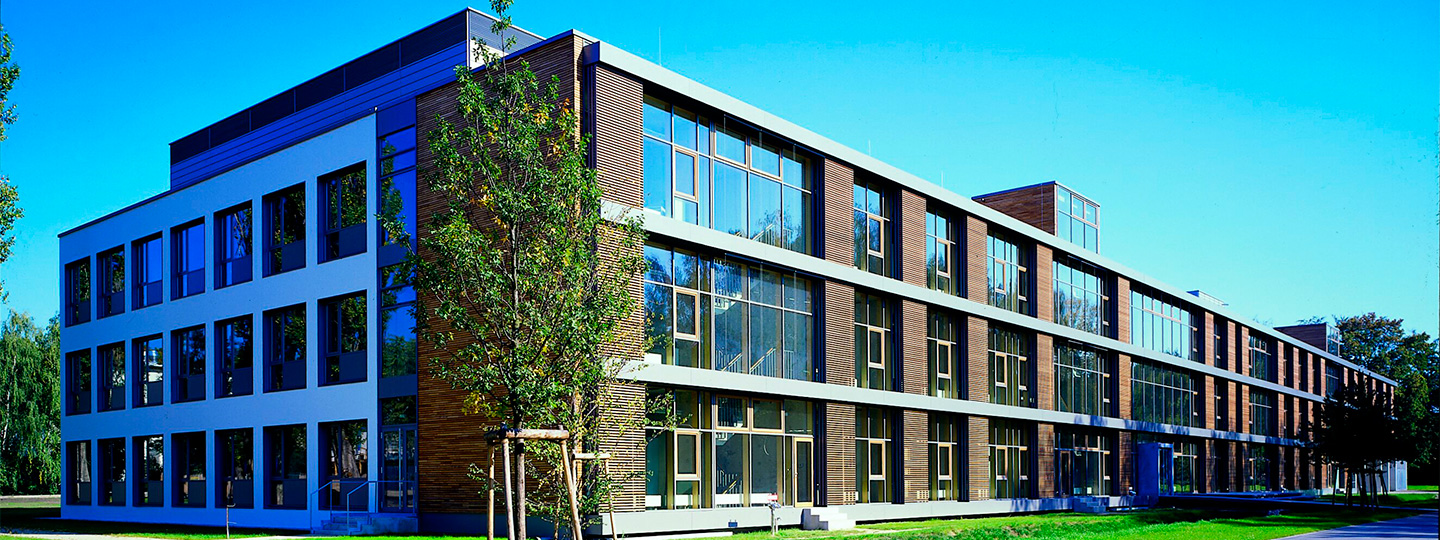
Marthe-Vogt building © Peter Himsel
A BRIEF HISTORY
The FMP was founded in 1992 as a successor to the “Institut für Wirkstofforschung”, an Institute of the Academy of Sciences of the GDR. It was renamed “Forschungsinstitut für Molekulare Pharmakologie” – hence, its acronym FMP. Originally located in Berlin-Friedrichfelde, the FMP moved to the new laboratory building on the Campus Berlin-Buch in 2000. Then as now, the institute focused on proteins as basic structures of the lives of all cellular organisms.
From the beginning, the FMP has been a member of the Leibniz Association and is therefore now called Leibniz-Forschungsinstitut für Molekulare Pharmakologie.
LEIBNIZ ASSOCIATION
The FMP is part of the Leibniz Association, which connects 97 research institutes and museums. The focus of the Leibniz Institutes ranges from the humanities to the natural, engineering and environmental sciences to economics, spatial and social sciences. Within the Leibniz Association FMP is part of section C: Life Sciences.


